

2026 Law Day Art & Essay Competition Winning Entries
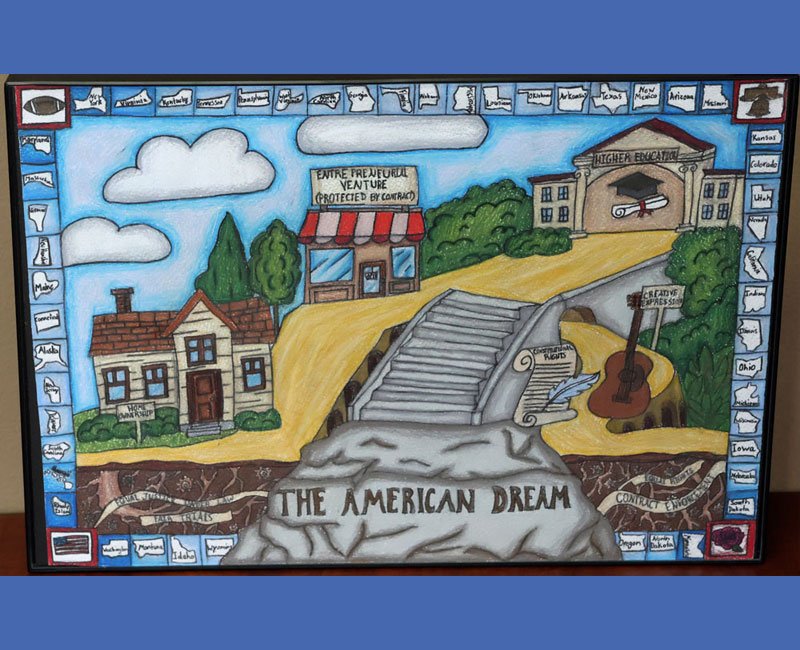
The 2026 Law Day theme is “Rule of Law and the American Dream.” The rule of law—the idea that no person is above the law—is what ensures the rights of the people to live their lives as freely as possible and to pursue their dreams. Here are the winning entries from those submitted by students throughout the county:
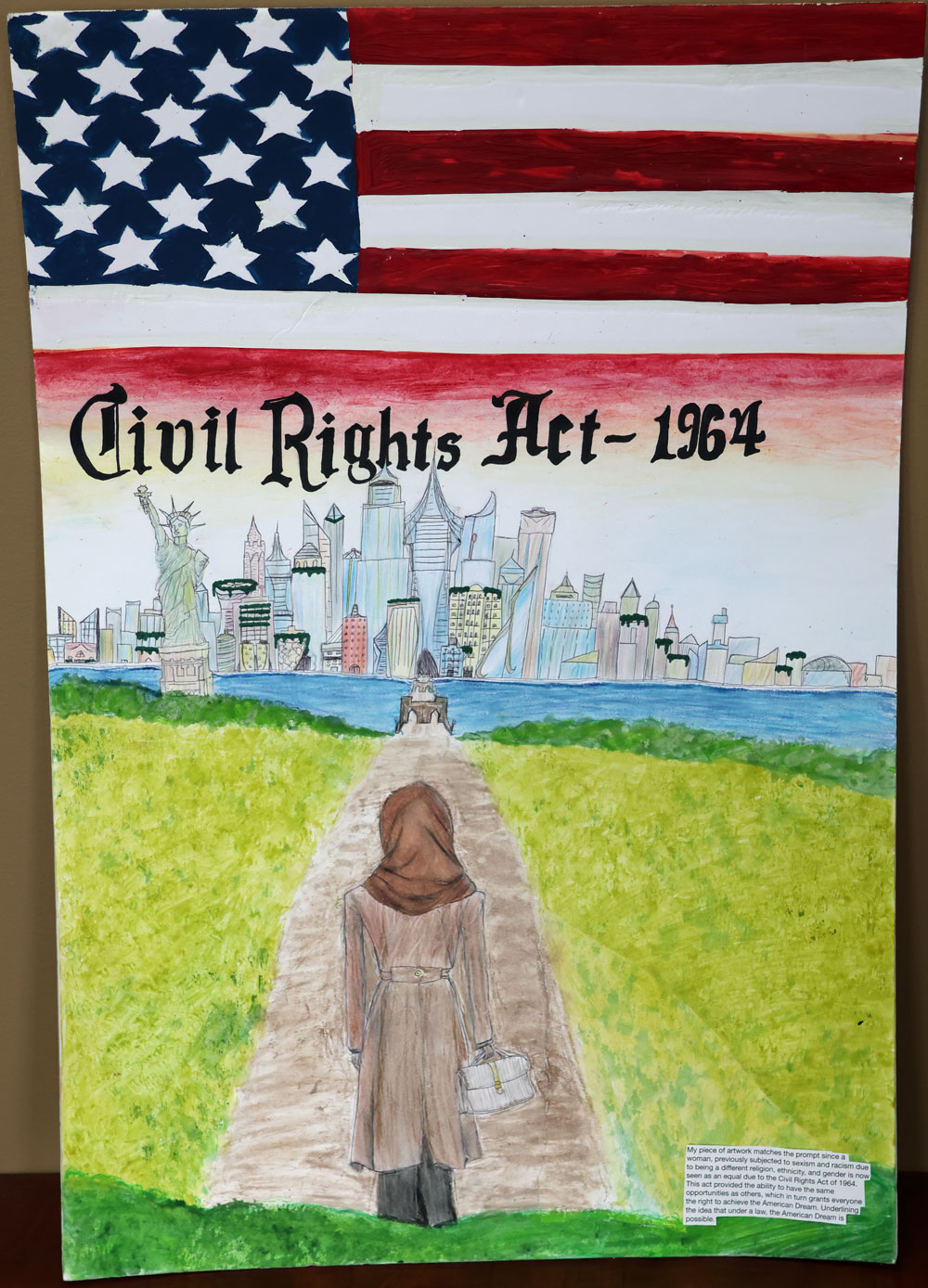
Tarek Ghayyada, Loyalsock Township Middle School
The Long Struggle
When I think of a law that has played an important role in American history I think of the 19th Amendment which gave women the right to vote. Before the 19th Amendment it was pretty hard for woman when they didn’t have as many rights as men did. Women did not have the same access as men did to political participation rights and education rights.
I think the 19th amendment was a very good thing that happened to every woman’s life. By 1896 women gained the right to vote in 4 states, by 1920 women could vote in all of the states in our country. Elizabeth Cady Santon was a woman who helped women get their rights to vote she was an American suffragist and a social activist.
Over the next 50 years women worked for the equal rights that men had in education. Women were able to get proper education because of the 19th amendment. Women had to fight to get the right for their education. In the early colonial history of America higher education was for men only. Women finally gained higher education access by the late 19th century. Susan B Anthony was a women’s rights activist who played a big role in the women’s suffrage movement I am glad they educated women or else the world would not be like it is today. Now I am able to get the same education that boys do.
I am very happy that the 19th amendment happened. The 19th amendment made a huge impact on my family’s life my mom is able to vote and so will I when I get older. It made all women very happy. I believe in women’s rights and it will always be that way.
Hayden Friant, Carl G. Renn Elementary School
Riley Plocinski, Loyalsock Valley Elementary
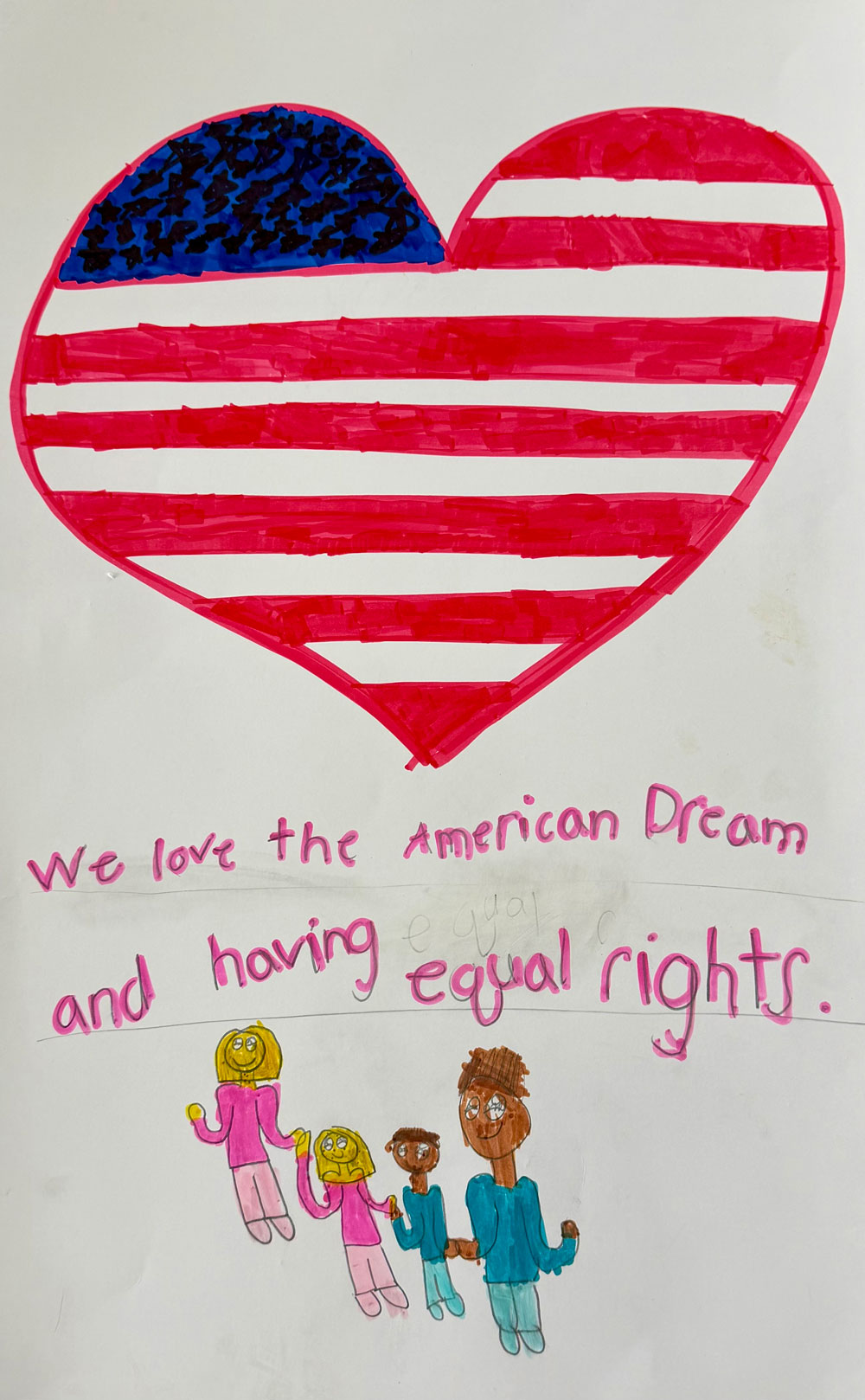
Do you know what the American Dream is? Well I will tell you about it. The American Dream is when you can have success when you work hard. It also means you have freedom. I believe a law that helps people pursue the American Dream is the Civil Rights Act, where you can go to work or go to school no matter what you look like, believe in or what gender you are.
The Civil Rights Act passed in 1964 by President Johnson but was originally put forward by President Kennedy. The law said the government can not use federal money for programs that discriminate against people. It also made the Equal Employment Opportunity Commission which helps people to get jobs without being judged by religion, race or gender. People can not be treated differently when registering to vote.
Another law that came from the Civil Rights Movement is the Voting Rights act of 1965. The law was made to get rid of literacy tests that discriminated against minorities. It also let people with disabilities be able to vote easier with more options.
The Civil Rights Act helps people pursue the American Dream by giving them the freedom to get a job, no matter who they are. If they want to have a certain job, they can't be refused based on what they look like or believe in. Because of this, people can pay their bills and afford things like a car, food, water and a house. The Voting Rights Act helps achieve freedom because it gives everyone the right to vote for who they believe in.
In conclusion, I believe that people should be treated fairly. That's the reason that I think these laws are important. They make it possible for people to have freedom in America.
Melanie Pearson, Donald E. Schick Elementary School
Tobias Bratt, Jersey Shore Elementary School
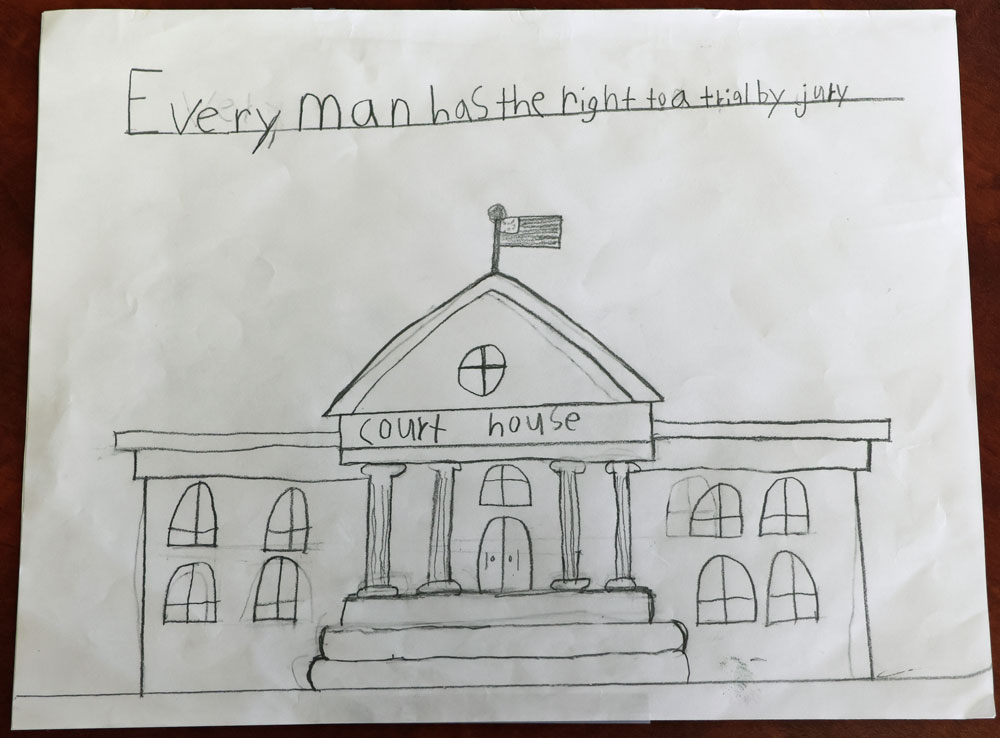
The American Dream to many people is a white picket fence. To other people, including immigrants, it is to have a good job, a comfortable bed, food on the table, freedom, and an ordinary life. The laws that America put in place make this happen, the economic rights, religious freedoms, and democracy. These are all part of the Constitution and Bill of Rights. My American dream is to some day join the national guard, have my own farm, have a nice family, and follow my dad's footsteps by helping as many people as possible.
How I and others can pursue this is by following state laws, which includes the right to own farms or care for your land. Another right that is put in place is that you can join the national guard at 17 with your parents consent, you may also join the National Guard at 18. According to the U.S. laws, 18 is when you become an adult. So therefore, you can make your own decisions. The Bill of Rights has so many laws that can help us make our own American Dream come true.
So now you know that the laws that our country has put in place are not to harm us, but to help us reach that American Dream. Whether you want to be a baker, priest, or preacher, the Constitution and Bill of Rights help us reach that. This means you can reach your dream, so reach it! This is the American Dream to me.
Emersyn Bird, St. John Neumann Regional Academy
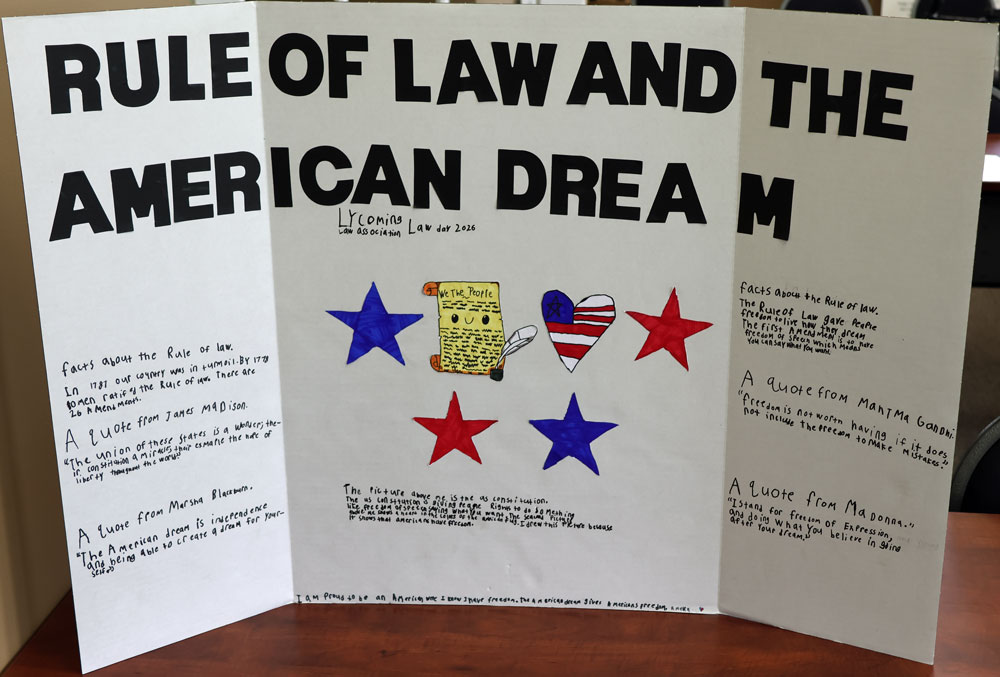
Sophie Karim, Jersey Shore Elementary School
Rule of Law and the American Dream
The American Dream rests upon a quiet but essential premise: that no individual, no institution, and no prejudice stands above the law. Without this principle - the rule of law - the promise of freedom becomes selective, granted to some and withheld from others. Few moments in American history illuminate this truth more clearly than the Civil Rights Act of 1964. As both a legal and moral watershed, the Act did more than prohibit discrimination; it reasserted the authority of law as an instrument of justice, capable of challenging entrenched inequality while advancing the nation toward its founding ideals.
Prior to 1964, the American legal system too often functioned as a mechanism of exclusion rather than protection. Segregation was not merely tolerated, it was codified, reinforced by local and state governments that denied millions of citizens equal access to public life. In this context, the Civil Rights Act represented a profound recalibration of the relationship between law and liberty. By outlawing discrimination on the basis of race, color, religion, sex, or national origin, it established that the rights promised in principle must be upheld in practice. In doing so, it strengthened the American Dream by affirming that opportunity should not be contingent upon identity.
For African-Americans, the Act marked a long overdue repudiation of Jim Crow - a system that systematically obstructed access to education, employment, and public accommodations. The law opened doors that had been forcibly closed, creating pathways toward social and economic mobility. Yet its importance lies not only in the opportunities it created, but in the principle it reinforced: that the law must serve as a shield for the marginalized, not a tool of their exclusion. In this sense, the Civil Rights Act did not simply expand rights; it restored faith in the rule of law as a guarantor of those rights.
Equally significant, though sometimes less emphasized, was the Act's inclusion of protections against discrimination on the basis of sex. This provision, added during congressional debate, would prove transformative in ways perhaps not fully anticipated at the time. By extending legal safeguards to women, the Act challenged long-standing norms that confined women to limited roles within both the workplace and society at large. It laid a critical foundation for future progress in gender equality - supporting efforts to secure fair wages, combat workplace discrimination, and expand professional opportunities.
For women pursuing their own version of the American Dream, this legal recognition was indispensable. It signaled that ambition need not be constrained by gender, and that the law would increasingly serve as an ally in the pursuit of equality. While true parity remained elusive, the Civil Rights Act marked a decisive step toward dismantling the legal barriers that had long restricted women's advancement. In this way, it broadened the very definition of the American Dream, making it more inclusive and reflective of the nation's diverse aspirations.
Yet, to fully understand the Act's relationship to the American Dream, one must also confront its limitations. The rule of law, while powerful, is not self-executing. The Civil Rights Act could prohibit discrimination, but it could not immediately eradicate the deeply ingrained biases and structural inequalities that sustained it. In many communities, resistance to the law was swift and resolute, revealing a tension between legal mandates and social realities. This resistance underscored a critical truth: the existence of just laws does not guarantee their uniform application.
Moreover, discrimination did not vanish, it evolved. Overt exclusion gave way to more subtle forms of inequality, embedded in housing patterns, educational disparities, and economic opportunity. For many Americans, particularly those from marginalized backgrounds, the path to success remained uneven, shaped by forces that extended beyond the reach of legislation. The American Dream, though more accessible than before, was still not equally attainable.
And yet, it is precisely within this tension that the enduring significance of the Civil Rights Act emerges. The law did not perfect the nation, but it redefined its trajectory. It established a standard against which injustice could be measured and challenged, empowering individuals and movements to demand accountability. In affirming that no one is above the Jaw, not even long-standing systems of discrimination, it strengthened the foundation upon which future progress would be built.
The Act also invites a broader reflection on the nature of the American Dream itself. If the Dream is to retain its meaning, it must be continuously examined and expanded. It cannot remain static while society evolves. The Civil Rights Act exemplifies this process: it translated ideals into enforceable rights, while simultaneously revealing the work that remained unfinished. It is both a milestone and a mirror, reflecting the nation's aspirations alongside its shortcomings.
Ultimately, the Civil Rights Act of 1964 stands as a testament to the power and the necessity of the rule of law in shaping a more just society. It affirmed that freedom is not merely an abstract ideal, but a condition that must be actively protected and extended to all. By safeguarding individual rights, it brought the United States closer to the promise of the American Dream, even as it exposed the distance still left to travel.
In this way, the Act's legacy is neither one of completion nor of failure, but of progress. It reminds us that the American Dream is not guaranteed; it is constructed - piece by piece, law by law, generation by generation. And while the vision of a society free from discrimination remains unrealized, the Civil Rights Act endures as one of the first and most essential steps toward making that vision possible.
Kristina Kranz, Loyalsock Township High School
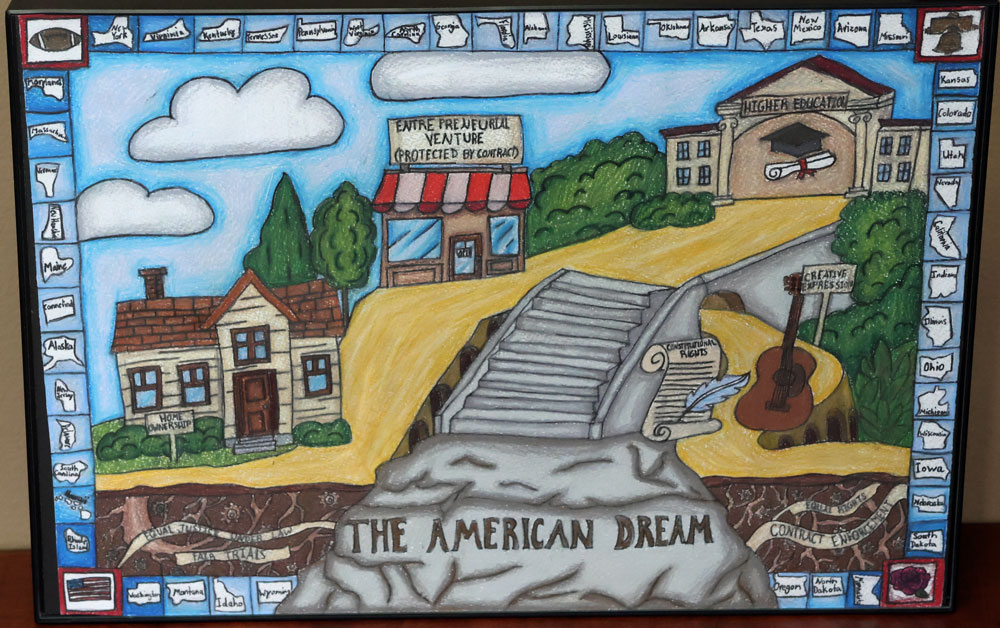
Madelyn VanFleet, Loyalsock Township Middle School
Reflect on a law that has played an important role in American history. How has it supported or challenged the American Dream for different groups of people?
"Those who would give up essential Liberty, to purchase a little temporary Safety,
deserve neither Liberty nor Safety" - Benjamin Franklin
In moments of crisis, nations are often forced to confront the tension between preserving freedom and ensuring security, both of which are essential to the American Dream.
The morning of September 11th, 2001, began as an ordinary, quiet day, with millions of Americans enjoying their daily lives. Within hours, that sense of normalcy was lost, replaced by fear, uncertainty, and a sudden loss of national security throughout the nation. As the country was bombarded with a series of terrorist attacks, the United States Government faced enormous pressure to respond quickly and effectively. Just 45 days later, Congress enacted the USA PATRIOT ACT, aiming to protect the American people and prevent future acts of terrorism. Passed in response to the fear and urgency following 9/11, the Patriot Act supported the American Dream by strengthening national security, but also challenged that ideal by expanding government surveillance and limiting civil liberties, particularly for minority communities, ultimately revealing the ongoing tension between freedoms and security in American life.
The American Dream is built upon the foundations of freedom, equality, and security, allowing individuals to pursue opportunity and personal success. In strengthening national security, the Patriot Act played an integral role in ensuring the safety of hundreds of millions of Americans from potential threats, reinforcing a sense of stability necessary for everyday life. By expanding intelligence-sharing capabilities and allowing federal agencies to monitor suspicious activity more effectively, the Patriot Act aimed to prevent future terrorist attacks and preserve public safety. In the decades following 9/11, the majority of Americans directly affected by the attacks supported these reforms, hoping to cement national security as a necessary foundation for the stability and opportunity central to the American Dream. According to the Chicago Council on Global Affairs, "62% of Americans believed that US intelligence agencies are necessary and play a vital role in protecting the nation" (Slick, Kim, 2025). More specifically, a Gallup poll of over 1,000 Americans highlights that over 69% of individuals are in favor of the Patriot Act, with 21 % stating "it does not go far enough" and the other 48% highlighting how it is "about right" (Gallup, 2003), demonstrating a widespread belief that these measures are vital to national protection. The Patriot Act ensures a level of security that allows individuals to live, work, and pursue their goals without constant fear. Through fostering public confidence in national safety, it creates a stability-driven environment that allows individuals to contribute to society and pursue the American Dream.
Despite its intentions to protect the American people, the Patriot Act also came with significant trade-offs regarding the preservation of individual freedoms. While the American Dream is heavily dependent on opportunity, it also relies on the protection of freedom and equality-ideals that do not always coexist easily. As national security expanded, Americans began to question whether their own freedoms were being compromised, as the Patriot Act allowed the government the ability to monitor phone calls, track internet activity, and access personal phone records. Critics argued that these reforms conflicted with the 4th Amendment, which guarantees citizens protection "against unreasonable searches and seizures" (Constitution Annotated, n.d.), raising concerns about the violation of constitutional rights.
Moreover, these concerns were not experienced equally across all Americans, as the Patriot Act concentrated power within the federal government, weakening traditional checks on authority and contributing to a broader sense of distrust. This tension was especially evident amongst minority communities. Following its passage, many Muslim and Arab American minority groups were subjected to profiling, discrimination, and harassment, resulting in unequal treatment under the law. For these individuals, the promise of the American Dream-built on freedom and equality-was fundamentally contradicted. Their dream was ultimately put in jeopardy, as justice was now served unequally. The lack of transparency surrounding the Patriot Act further intensified these concerns, as the government was notoriously secretive. and citizens remained unaware of the extent to which they were being watched. With an increase in security, the Patriot Act sought to protect the nation, yet also challenged the very freedoms that define the American Dream, hindering many minorities from obtaining it.
The Patriot Act, following 9/11 , both upheld and challenged the American Dream by strengthening national security while expanding government surveillance and restricting civil liberties--especially for minority communities-ultimately exposing the enduring tension between freedom and security in American life. Its passage marked the beginning of a new era in national debate, in which the balance between liberty and protection grows increasingly tense, prompting many to reconsider the true integrity of the American Dream. While some Americans continue to view it as a necessary tool for preventing terrorism, others-particularly minority groups-argue that it goes too far in limiting civil liberties. As public opinion wavers, the division only becomes greater, revealing the challenges of maintaining unity while upholding the values that define the American Dream. This division highlights the difficulty of maintaining unity in a nation built on competing ideals. The debate only reveals a deeper truth: the American Dream is not sustainable without both safety and freedom, and to compromise one for the other risks weakening the very foundation upon which the nation was built.
Adam Ghayyada, Loyalsock Township High School
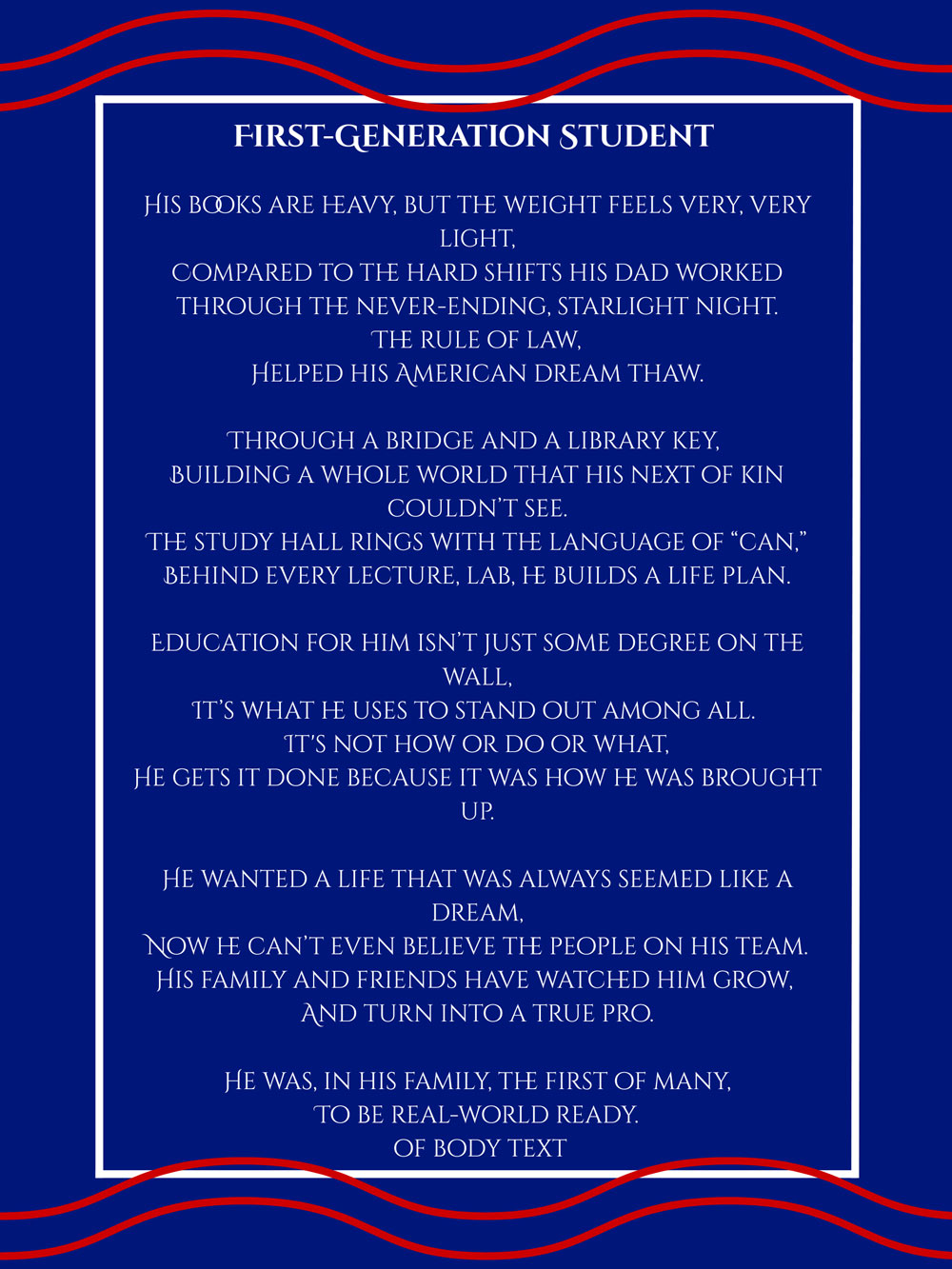
Caitlyn Steppe, Loyalsock Township Middle School
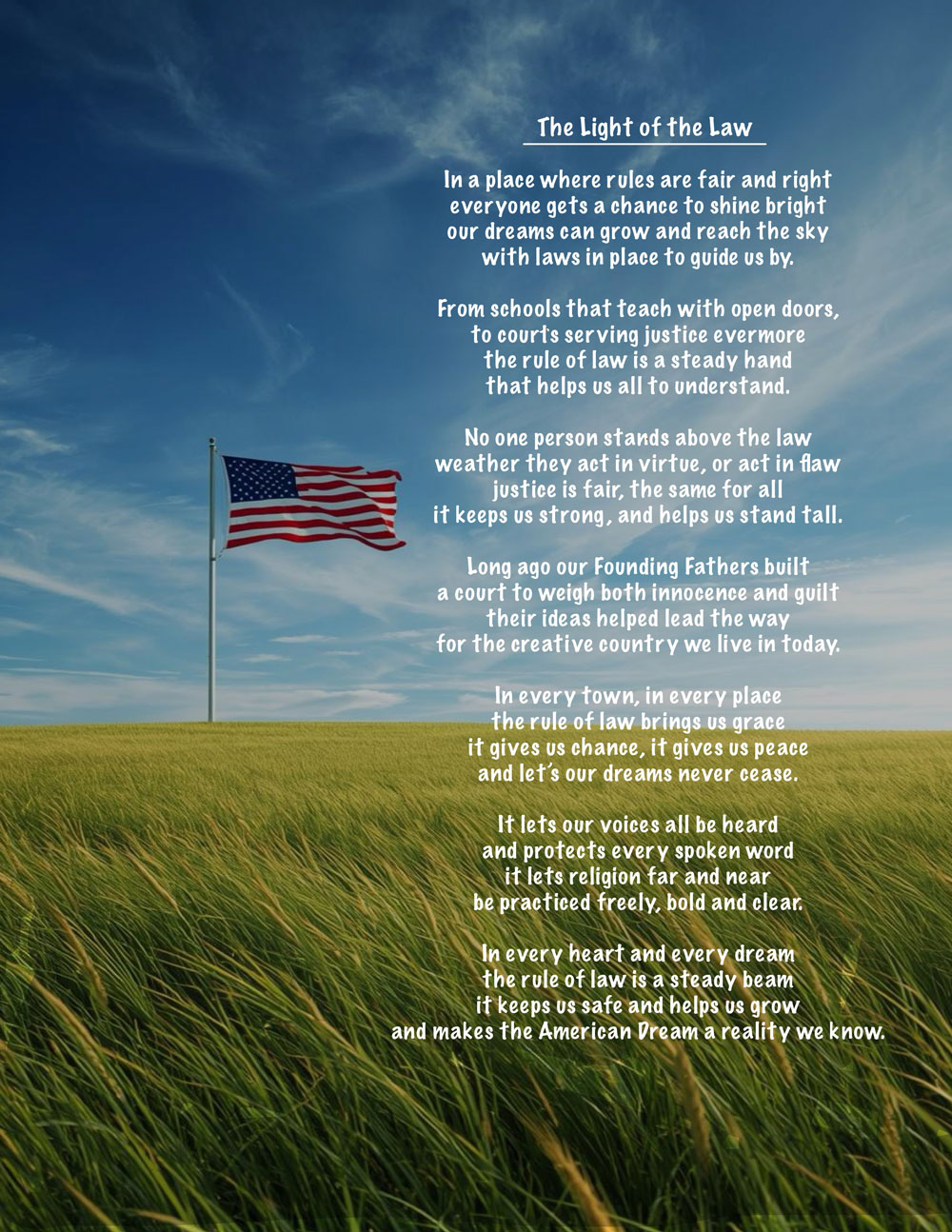
Charlotte Cappel, Loyalsock Township Middle School

Abbygale Madron, Jersey Short Elementary School
